







Motor Insurance
Used EV Insurance UAE 2026: Battery Health Certificate Rules

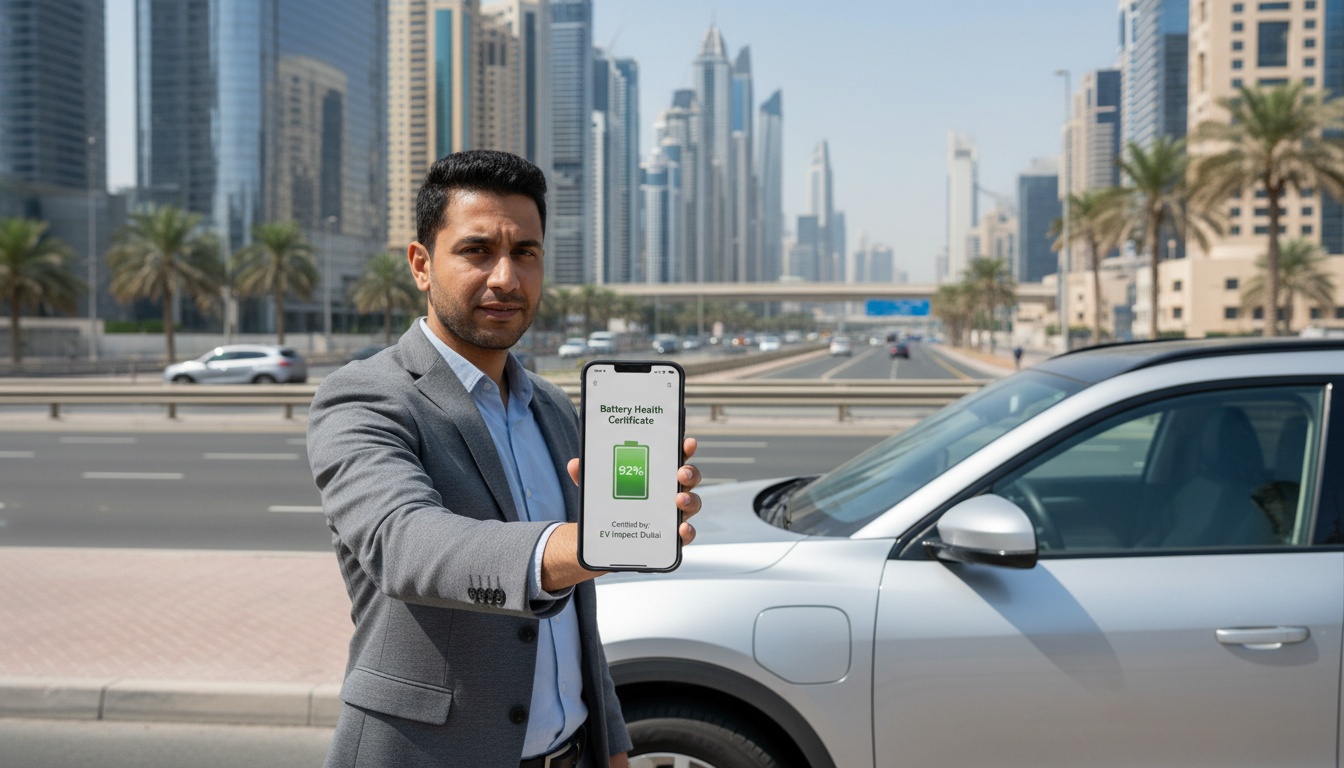
Buying a used electric vehicle in the UAE just got more complex. In 2026, major insurers now require a certified Battery Health Certificate before offering comprehensive motor insurance on EVs older than two years. Whether you're eyeing a pre-owned BYD, Geely, or Tesla, understanding how your battery's State of Health (SOH) affects your motor insurance eligibility and premium is essential before signing any transfer papers.
What is a Battery Health Certificate and Why is it Mandatory in 2026?
A Battery Health Certificate is an official diagnostic report that measures an EV battery's current capacity relative to its original factory specification — expressed as a percentage known as State of Health (SOH). In 2026, UAE insurers regulated by the Central Bank of the UAE have aligned underwriting guidelines to require this document for any used EV seeking comprehensive coverage.
The mandate is driven by a market reality: battery replacement costs in the UAE can exceed AED 60,000–AED 120,000 depending on the model, making a degraded battery a major risk factor for insurers calculating Total Loss thresholds. Unlike conventional cars, where age and mileage determine value, an EV's worth is inseparable from its battery's condition.
The Road and Transport Authority (RTA) now mandates battery health documentation during vehicle registration transfers, meaning you'll need the certificate not just for insurance — but to legally register ownership. If you're comparing EV models before buying, our guide on Chinese Hybrid vs EV Insurance UAE 2026 breaks down how different drivetrains are priced across the market.
How Battery State of Health (SOH) Impacts UAE Insurance Underwriting
UAE insurers now tie the "Agreed Value" of a used EV directly to its certified SOH percentage rather than solely its model year or mileage. This fundamentally changes how claims — particularly Total Loss decisions — are calculated.
Under 2026 underwriting rules, if the estimated battery replacement cost exceeds 50% of the vehicle's certified agreed value, the car is typically written off. This threshold has significant implications for owners of popular Chinese brands like BYD and Geely, where battery packs are expensive but third-party supply chains are still maturing in the UAE.
The SOH rating system used by RTA-approved testing centers classifies batteries into three tiers:
| Battery Health (SOH %) | Insurance Eligibility | Premium Impact | Agency Repair Availability |
|---|---|---|---|
| 90%–100% (Grade A) | Full comprehensive coverage available | Standard or discounted premiums | Yes, fully available |
| 80%–89% (Grade B) | Comprehensive available with conditions | 10%–20% premium loading | Partial — subject to insurer |
| Below 75% (Grade C) | Comprehensive heavily restricted | High loading or declined | Typically not available |
For owners of out-of-warranty vehicles, the stakes are even higher. Our detailed breakdown of Out-of-Warranty EV Battery Insurance UAE 2026 explains what coverage options remain available after the manufacturer guarantee lapses.
Comparing Used EV Insurance Costs: Certified vs. Non-Certified Batteries
The cost difference between insuring a certified versus non-certified used EV in the UAE is significant — and growing. Insurers treat an uncertified battery as an unknown liability, which translates directly into higher premiums or outright refusal of comprehensive policies.
A Grade A certified battery (90%+ SOH) on a two-year-old BYD Atto 3 may attract an annual comprehensive premium of approximately AED 3,500–AED 4,500. The same vehicle without a valid certificate could face a 25%–40% premium loading — or be limited to TPL-only coverage at AED 700–AED 900, leaving the owner fully exposed to own-damage losses.
For buyers of used Chinese EVs specifically, agency repair availability is another key variable. Insuring a vehicle through a policy that includes garage-network repair without verifying approved service centers can create nasty surprises at claim time. The guide on Approved Garages for Geely and BYD in UAE 2026 is essential reading before purchasing.
You can compare used EV motor insurance plans on licensed platforms to identify which insurers offer the most competitive rates for certified battery vehicles.
Compare & Choose a Plan
Step-by-Step Guide to Obtaining a Valid Certificate for UAE Registration
Getting a valid Battery Health Certificate in the UAE follows a defined process in 2026:
- Visit an RTA-approved testing center or authorized agency workshop. Both Dubai and Abu Dhabi have designated facilities — check the RTA website or the Ministry of Industry and Advanced Technology (MoIAT) portal for the current approved list.
- Present the vehicle's registration card and purchase invoice. Testing centers will link the SOH report to the chassis number for authentication.
- Undergo the diagnostic scan. The process typically takes 30–60 minutes and generates a standardized digital report.
- Receive your graded certificate. The document is valid for 12 months and must be renewed at each annual registration.
- Submit to your insurer during policy issuance. Insurers registered with the Central Bank of the UAE are required to record the SOH grade in the policy schedule.
Before completing your purchase, also review the full Used BYD or Geely Insurance Inspection Guide 2026 to ensure you haven't missed any other documentation requirements specific to Chinese EV models.
Get a Free Quote Now
Conclusion
Bottom line: In 2026, the Battery Health Certificate is no longer optional for UAE residents seeking comprehensive motor insurance on used electric vehicles. Your battery's SOH grade directly determines your premium, coverage eligibility, and even your vehicle's agreed value in a Total Loss scenario. Verifying certification before purchase protects your wallet at the dealership and with your insurer.
Compare and buy used EV motor insurance on licensed platforms — quickly and transparently, with plans from UAE Central Bank–regulated insurers.
Short Summary: UAE's 2026 Battery Health Certificate rules now determine used EV insurance eligibility, premiums, and Total Loss thresholds — here's what buyers must know.
Meta Description: Buying a used EV in UAE? 2026 Battery Health Certificate rules now affect motor insurance premiums and coverage. Learn SOH grades and what to do.
Slug: used-electric-car-insurance-2026-battery-health-certificate-uae
Explore Plans →
FAQ
Is a Battery Health Certificate required for RTA registration and renewal in 2026?
Yes. As of 2026, the RTA requires a valid SOH certificate for ownership transfer registration of EVs older than two years. Annual renewal also requires an updated certificate if the vehicle's battery has not been previously graded within the last 12 months.
Will my insurance premium decrease if my EV battery shows 95% health?
A Grade A rating (90%–100% SOH) typically qualifies for standard or even discounted comprehensive premiums. Some UAE insurers offer a 5%–10% reduction compared to unverified EVs, reflecting the lower Total Loss risk associated with high-health batteries.
Do UAE insurers cover battery degradation under comprehensive policies?
Standard comprehensive policies do not cover gradual battery degradation as it is considered normal wear and tear. However, sudden battery failure caused by an accident or a covered peril — such as fire — may be claimable. Always read your policy wording carefully.
Which authorized centers in Dubai and Abu Dhabi issue valid health certificates?
RTA-approved vehicle testing centers and brand-authorized agency workshops (e.g., BYD, Tesla, and Geely service centers) are authorized to issue valid certificates. The RTA website maintains an updated list of approved facilities across both emirates.
What happens to my insurance if a used EV battery falls below the 70% health threshold?
If an in-policy reassessment reveals the battery has degraded below 70%–75% SOH, most UAE insurers will reclassify the vehicle to TPL-only coverage and may flag it for a reduced agreed value. Policyholders should proactively request a new certificate and disclose it to their insurer to avoid claim disputes.
Editorial note: This article is for general information and does not constitute insurance advice. Always confirm terms with your insurer.