






Travel Insurance
Visa-Free Travel 2026: Medical Evacuation Cost Trap UAE

UAE residents are travelling more in 2026 than ever before — and new visa-free access to Europe and beyond makes departure feel effortless. But a border you can cross without a visa is not a border you can cross without financial risk. Before your next trip, explore your travel insurance options on eSanad and understand why medical evacuation coverage may be the most important line in your policy.
What is Medical Evacuation and Why Does 2026 Visa-Free Travel Change the Risk?
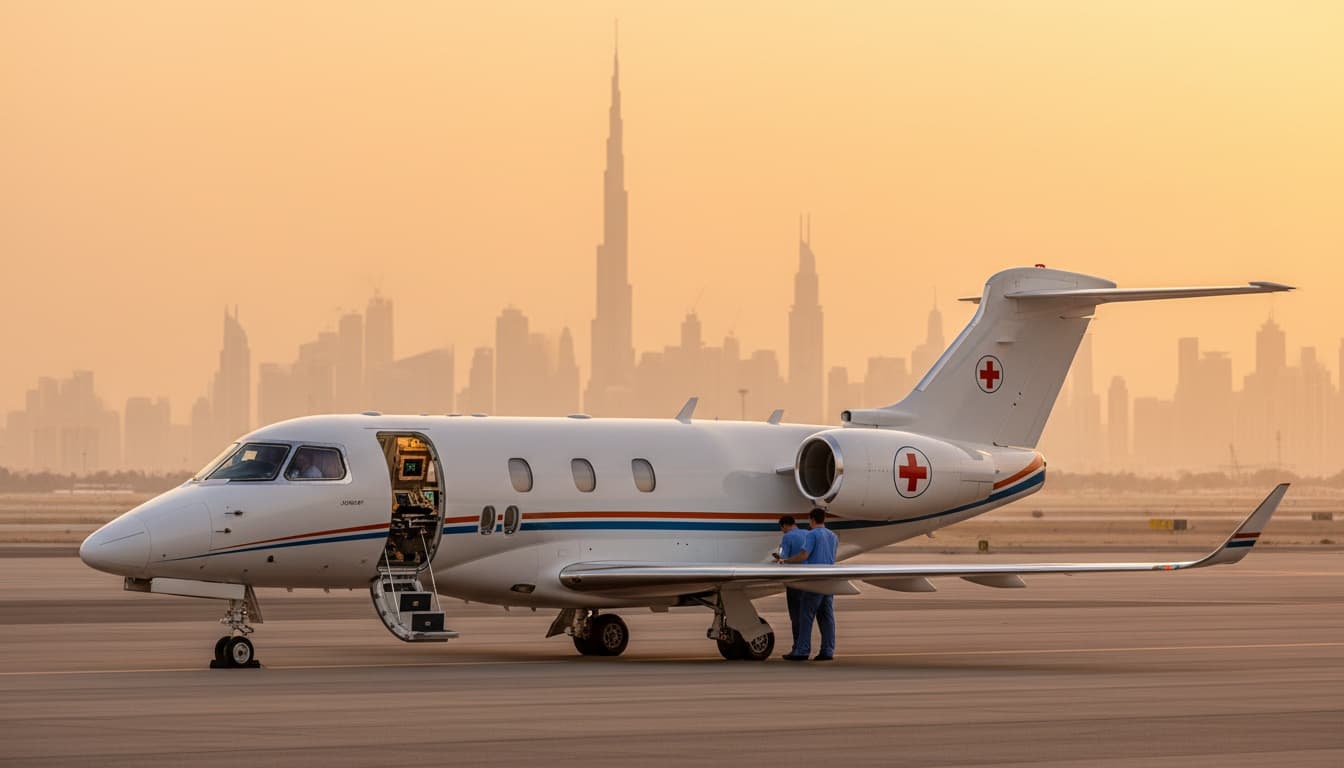
Medical evacuation — often called "medevac" — is the emergency transport of a patient from the location where they fell ill to a facility capable of providing appropriate care. For UAE residents, that destination is typically a hospital back home: Cleveland Clinic Abu Dhabi, Mediclinic City Hospital Dubai, or a similar centre of excellence.
Here is where 2026 changes things significantly. New electronic travel authorisations like Europe's ETIAS system have simplified entry for UAE passport holders, removing the need for a stamped Schengen visa. Previously, Schengen visa applications required proof of travel insurance with a minimum €30,000 medical cover. That documentation check no longer happens at the same touchpoint — meaning thousands of UAE travellers are boarding flights without realising the mandatory safety net has quietly disappeared.
Visa-free does not mean risk-free. The EU Entry/Exit System 2026 confirms that digital authorisation systems track entry but do not verify health insurance limits. Seniors, families, and those with pre-existing conditions face the greatest exposure when a medical emergency strikes abroad.
The 2026 Cost Trap: Breaking Down Air Ambulance and Repatriation Expenses
This is where the numbers become alarming. In 2026, a private air ambulance from the United States to Dubai costs between $180,000 and $250,000, driven by fuel price increases, specialised ICU-in-the-air staffing, and landing permissions. Transport from Southeast Asia — Thailand, Indonesia, the Philippines — ranges from $60,000 to $120,000. Even intra-European medical repatriation to the UAE regularly exceeds $80,000.
These figures matter because most standard or "visa-linked" travel insurance policies — including many packaged with UAE credit cards — cap medical evacuation at $50,000. That gap is not a technicality; it is a potential quarter-million-dirham personal liability landing in your lap during the worst moment of your life.
Three cost components make up the total repatriation bill:
- Air ambulance charter: The largest expense, often 70% of the total
- Medical escort and in-flight ICU staffing: Doctors and nurses on board, billed per hour
- Ground ambulance coordination: Both at origin and destination airport
For UAE travellers who frequently visit remote or adventure destinations, the one-way travel insurance considerations for 2026 are equally relevant — a policy without a confirmed return leg may also exclude medevac triggers.
Additionally, "repatriation of remains" — in the event of death abroad — carries separate costs of AED 30,000 to AED 80,000 that standard policies often sublimit or exclude entirely.
Visa-Linked vs. Comprehensive Travel Insurance: Comparing Coverage Limits
The table below illustrates the coverage gap UAE travellers face when choosing minimum-compliant policies over comprehensive plans.
| Service Type | Basic / Visa-Linked Policy | Comprehensive UAE Policy |
|---|---|---|
| Medical Evacuation Limit | Up to $50,000 | Up to $500,000 or unlimited |
| Repatriation to UAE | Excluded or sublimited at $10,000 | Full bed-to-bed transfer covered |
| Bed-to-Bed Medical Escort | Not included | Included with specialist escort |
| Repatriation of Remains | $5,000–$10,000 cap | $15,000–$30,000 or full cost |
| 24/7 Assistance Coordination | Basic helpline only | Dedicated medevac coordination team |
The distinction between local hospitalisation and medical repatriation is critical. Local hospitalisation covers your treatment in the country you are visiting. Medical repatriation is the act of transporting you back to the UAE — a completely separate benefit with its own limit.
UAE residents should also check whether their policy specifies bed-to-bed transfer, meaning the insurer manages the entire journey from the foreign hospital bed to a UAE hospital bed, including ground transport at both ends. Policies that only cover the flight itself leave significant gaps.
The medical evacuation credit card insurance gaps for UAE travellers in 2026 blog breaks down exactly which card-linked policies fall short and why.

Compare & Choose a Plan
Essential Checklist: Evaluating Your Policy's 2026 Medical Evacuation Clause
Before your next international trip, review your travel insurance policy against this checklist:
- Evacuation limit: Is it at least $250,000 per person? Anything lower is insufficient for US or UK transport back to the UAE.
- Bed-to-bed transfer: Does the policy explicitly state it covers the full journey, not just the air ambulance flight?
- Repatriation of remains: What is the sublimit, and does it cover UAE-specific formalities including documentation and religious requirements?
- Pre-existing condition clause: Are chronic conditions covered for emergency evacuation, or excluded entirely?
- Destination-specific exclusions: Are adventure destinations, remote islands, or conflict-adjacent zones excluded?
- 24/7 coordination service: Does your insurer have a dedicated medical assistance team, not just a call centre?
- UAE hospital specification: Can you request transfer to a specific UAE facility like Cleveland Clinic Abu Dhabi?
UAE residents can compare comprehensive travel insurance plans on licensed platforms to identify policies that meet all seven criteria above, with transparent coverage limits and direct insurer access.
Get a Free Quote Now
Conclusion
Bottom line: Visa-free travel in 2026 makes crossing borders easier — but it has quietly removed the insurance checkpoint that once protected UAE travellers from catastrophic medevac costs. A $200,000 air ambulance bill is not a theoretical risk; it is a documented reality for UAE residents who chose the cheapest policy available. Ensure your travel plan includes high-limit evacuation coverage, bed-to-bed repatriation, and 24/7 coordination before you board.
Short Summary: Visa-free travel in 2026 removes the insurance check — leaving UAE residents exposed to $250,000 medevac bills without adequate cover.
Meta Description: Visa-free travel in 2026 hides a costly trap for UAE residents. Learn why medical evacuation cover up to $250,000 is essential before you fly.
Slug: visa-free-travel-2026-medical-evacuation-cost-trap-uae
Explore Plans →
FAQ
Does my UAE credit card travel insurance include full medical evacuation coverage?
Most UAE credit card travel insurance policies cap medical evacuation between $30,000 and $50,000 — far below the $180,000–$250,000 cost of a long-haul air ambulance back to the UAE. Always read the policy schedule, not just the credit card marketing material, and supplement with a standalone comprehensive travel plan.
What is the difference between local hospitalisation and medical repatriation?
Local hospitalisation covers your treatment costs in the country you are visiting. Medical repatriation is a separate benefit covering the cost of physically transporting you back to the UAE. Many basic policies cover the former adequately but severely sublimit or exclude the latter, creating a dangerous gap.
Why are medical evacuation costs increasing in 2026?
Air ambulance costs have risen in 2026 due to higher aviation fuel prices, increased demand for specialised ICU-equipped aircraft, and stricter crew-to-patient staffing ratios. Long-haul routes from North America and Europe to the UAE are particularly affected, with total costs regularly exceeding AED 700,000.
Is medical evacuation insurance mandatory for Schengen visa-free entry from the UAE?
Technically, ETIAS electronic authorisation does not require proof of evacuation insurance at the border. However, individual Schengen countries can request evidence of financial means, and the legal responsibility for all health costs falls on the traveller. Carrying adequate evacuation coverage is strongly recommended by the UAE Ministry of Foreign Affairs (mofa.gov.ae).
Will my insurance cover an air ambulance back to a Dubai or Abu Dhabi hospital?
Only if your policy explicitly includes medical repatriation to the UAE with a sufficient limit (ideally $250,000 or above) and states bed-to-bed coverage. Policies that only cover treatment abroad — not transport home — will not pay for an air ambulance. Check your policy wording carefully or speak to an adviser on eSanad before travel.
Editorial note: This article is for general information and does not constitute insurance advice. Always confirm terms with your insurer.